
How to Choose the Right Formal Shirt Collar
Point, spread, cutaway and button-down collars explained — and how face shape, tie knots and occasion guide the choice.
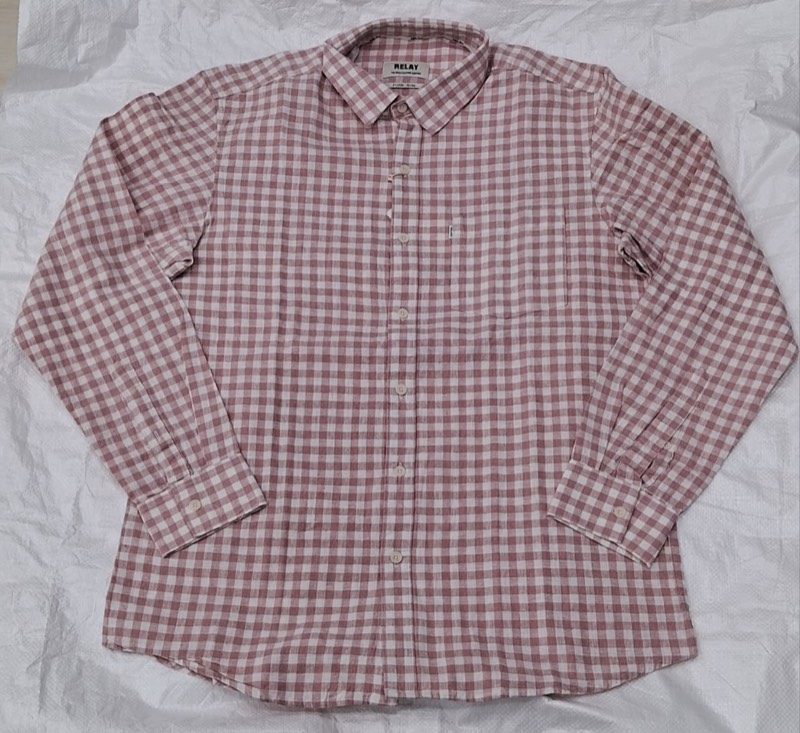
The collar is the part of a shirt that sits closest to your face, and it is the part people look at first, whether they realise it or not. It frames the jaw, holds the tie in place and decides how the shirt behaves under a jacket. Choosing well is less about following rules and more about understanding what each collar does, so that you can match it to your face, your tie habits and the kind of days you actually lead.
Why the collar matters more than you think
For much of the nineteenth century the collar was not even part of the shirt. Detachable collars, often associated with Troy, New York, were starched stiff, fastened on with studs and replaced when they wore out or yellowed, while the shirt body underneath was washed less often. Soft collars sewn permanently to the shirt became standard in the 1920s and 1930s, and with them came the variety of shapes we know today. The collar has always been the most carefully considered part of a shirt.
Today a good collar does three jobs. It should stand up neatly at the back of the neck so that it shows just above a jacket collar. Its points should lie flat against the chest rather than curling or lifting. And it should leave the right amount of space for a tie knot, or look deliberate when worn open. If you want a broader overview of shapes before narrowing down, the shirt style directory sets out the main collar types side by side.
The main collar styles, explained
Point collar. The traditional, narrower collar, with points that angle downwards and sit relatively close together. It suits slimmer tie knots such as the four-in-hand and has a slightly conservative, tidy look. It tends to flatter round or broader faces because it adds a vertical line.
Semi-spread collar. The points open outwards a little more than a point collar but not dramatically. This is the most versatile choice for men's formal shirts: it works with or without a tie, suits most face shapes and sits well under nearly every jacket lapel. If you buy only one collar style, it is a sensible default.
Spread collar. The points open wider still, leaving a clear gap that suits a fuller knot such as a half-Windsor. It looks confident and slightly more formal, and it balances a long or narrow face by adding width.
Cutaway collar. An extreme spread, with points swept back almost horizontally. It is a fashion-forward, very European look that needs a substantial tie knot to fill the space. Worn open, it can look bare, so keep it for tie days.
Button-down collar. The points are fastened to the shirt front with small buttons. The style is associated with Brooks Brothers, who adapted it from the shirts worn by polo players around the turn of the twentieth century, when the buttons kept collars from flapping during play. It has a softer, more relaxed character and is the natural collar for business casual, but it is generally considered too informal for a suit at a serious meeting or a formal evening.
Band or mandarin collar. A short upright collar with no points at all, which cannot be worn with a tie. In India it has an obvious partner in the bandhgala or Nehru-style jacket, where a standard collar would clash with the jacket's own high neckline. It is a useful choice for festive office gatherings and evening functions.
Wing collar. A small standing collar with tiny folded tips, worn with a bow tie for the most formal dress codes. Most men will need one only for black-tie or white-tie occasions.
Matching the collar to your face and build
The simplest principle is contrast and balance. A collar repeats or counters the lines of your face, so choose one that brings you closer to the middle rather than exaggerating what is already there.
- Long or narrow face: a spread or semi-spread collar adds width and softens length. Very long, narrow point collars can make the face look longer still.
- Round or broad face: a point collar or modest semi-spread adds vertical lines. A wide cutaway may make the face appear rounder.
- Thick or short neck: a collar with a lower band and moderately long points helps, as a tall band can look as though it is pressing upwards.
- Long or slim neck: a slightly taller collar band fills the space and stops the neck looking exposed.
Proportion matters too: a large frame can carry longer points and wider spreads, while a slight build usually looks best in shorter points and a moderate spread. A mirror will always tell you more than any chart.
Collar and tie: getting the knot right
The space between collar points is effectively a frame for the tie knot, and the two should be in proportion. A narrow point collar with a large knot looks cramped, with the collar points pushed outwards. A wide cutaway with a small, thin knot looks as though something is missing.
- Point collar: four-in-hand or a small, neat knot.
- Semi-spread collar: four-in-hand or half-Windsor, depending on the tie's thickness.
- Spread and cutaway collars: half-Windsor or a fuller knot, especially with a thinner silk.
- Button-down collar: a simple four-in-hand, or simply no tie.
Tie width should broadly follow the jacket lapel, and collar spread should follow both. The gentleman's style guide goes further into coordinating ties, jackets and shoes.
Wearing a collar without a tie
Many office wear shirts for men now spend most days without a tie, and not every collar behaves well open. A collar with a firmer interlining and a reasonably tall band will stand up and frame the neck; a soft, low collar tends to collapse flat and disappear under a jacket lapel.
Semi-spread and button-down collars usually handle this best. Spread collars can work open if they are firm enough. Cutaways tend to splay too wide. In Mumbai's heat, when a tie is often the first thing to go, it is worth choosing collars with this in mind; a shirt that looks crisp with the top button open is far more useful than one that only looks right with a tie.
Collar construction and the details that keep it sharp
Collar stays, the thin strips placed in pockets on the underside of the points, stop points from curling. Removable stays should be taken out before washing and put back once the shirt is ironed.
Collars are also built differently inside. A fused collar has its interlining bonded to the fabric, giving a consistently crisp look with little ironing. A non-fused or floating interlining gives a softer, more natural roll but needs more care. Neither is automatically better; it depends on whether you prefer a sharp, structured finish or a more relaxed one. More on these choices is in our guide to fabrics, collars and craftsmanship.
Fit around the neck matters too. You should be able to slip one or two fingers inside a buttoned collar without strain. Any tighter and the collar will pinch and wrinkle; any looser and it will gape when a tie is drawn up. The shirt fit guide covers collar fit alongside shoulders, chest and sleeves.
A simple decision guide
- Start with how often you wear a tie. Daily: point, semi-spread or spread. Rarely: semi-spread or button-down. Never: button-down or band.
- Consider your face and frame. Wider spread for long faces, narrower points for round faces, proportionate point length for your build.
- Think about the jacket. Wide lapels want a wider collar; slim lapels look better with a semi-spread or point collar.
- Check the formality of the occasion. Spread and semi-spread for boardrooms and interviews, button-down for relaxed days, band collar with Indian formal jackets, wing collar for black tie.
- Test it open and closed. Button it fully, then undo the top button and look again in the mirror.
Choosing a collar is ultimately about seeing it on. Fit and proportion change from one shirt to the next, and the differences between a semi-spread and a spread are much easier to judge in a mirror than on a screen. If you are in Mumbai, visit Options Mall in Vile Parle West to try a few collar styles side by side, ideally with the jacket and tie you wear most often.
The Modern Gentleman's Journal · Options Mall, Vile Parle West, Mumbai